
In July 2022 I rowed my second live online race on the rowing machine. It was not planned as far in advance as the first race (German). Someone simply asked me in the SmartRow Discord channel whether I wanted to join.
I was the only one with my camera on. Probably not everyone wants to show their living room, bedroom or basement. But maybe there is also a bit of hesitation about whether your own rowing technique is any good?
That made me want to write down how to use a rowing machine correctly.
Where I am coming from
First things first: I started rowing at the beginning of 2022 on my rowing machine (German), a WaterRower, and looked up what I needed on the internet and on YouTube. I am not a professional rowing coach. Often all you need is the right sources to get going. Rowing groups on Facebook help too: if you post a video of your technique, you get plenty of tips.
Really good feedback on your technique comes from local rowing clubs. You will often find a rowing machine in the boathouse, so you can get feedback right away. A video of yourself helps as well, see "How can you row better?" (German).
How do you use a rowing machine correctly?
As a child you learn to walk, ride a bike, maybe swim. Rowing has to be learned too, but usually as an adult.
I started on the WaterRower, and since October 2022 I also have a Concept2 (German). How do you use the WaterRower correctly, and which technique matters on the Concept2?
From my perspective there are three situations in which this question comes up:
- There is a rowing machine at the gym (German) and no instructions. How do you use it properly?
- You bought a used machine (German) and want to find out how it works.
- Or you bought a new rowing machine and want to teach yourself, like I did (German).
First, set up the machine, or put it where it will stand, if you have not done that yet. You need some space and room for your arms to complete the stroke properly.
Once the rower sits on a level surface and you have enough room, you can start:
- Sit down on the seat. If you like, use a seat cushion or a towel (German).
- Strap your feet in. The right foot position depends on your shoe size. Ideally the straps run across the balls of your feet.
- Start with a few easy warm-up exercises (German), for example rolling forwards and backwards and circling your arms.
- Take the handle. You can add rowing gloves (German) or CrossFit (German) gloves to protect your hands.
- Go through the individual steps of the stroke (further down in this article).
Once your body is warm and the workout can start, it is all about technique. I like to let this video explain it:
There are also two good videos in German, one by Anna Mühle and one by Concept2 Germany (YouTube’s automatic subtitles can help):
How do you row correctly? The stroke, step by step
In the article on building muscle with a rowing machine (German) I already listed the phases of the stroke together with the muscles involved. There are four phases:
- Catch (front turnaround): you sit forward on the seat, knees bent, shins roughly vertical, arms straight and the upper body leaning slightly forward.
- Drive (the pull): first the legs push, then the upper body swings back, and last the arms pull the handle to your body.
- Release (back turnaround): legs are extended, the upper body leans slightly back and the handle is close to your body, roughly at the level of your lower ribs.
- Recovery (the return): the return runs in reverse order: arms forward first, then the upper body, and finally you roll forward with bent knees.
These graphics help to understand and learn the technique step by step:
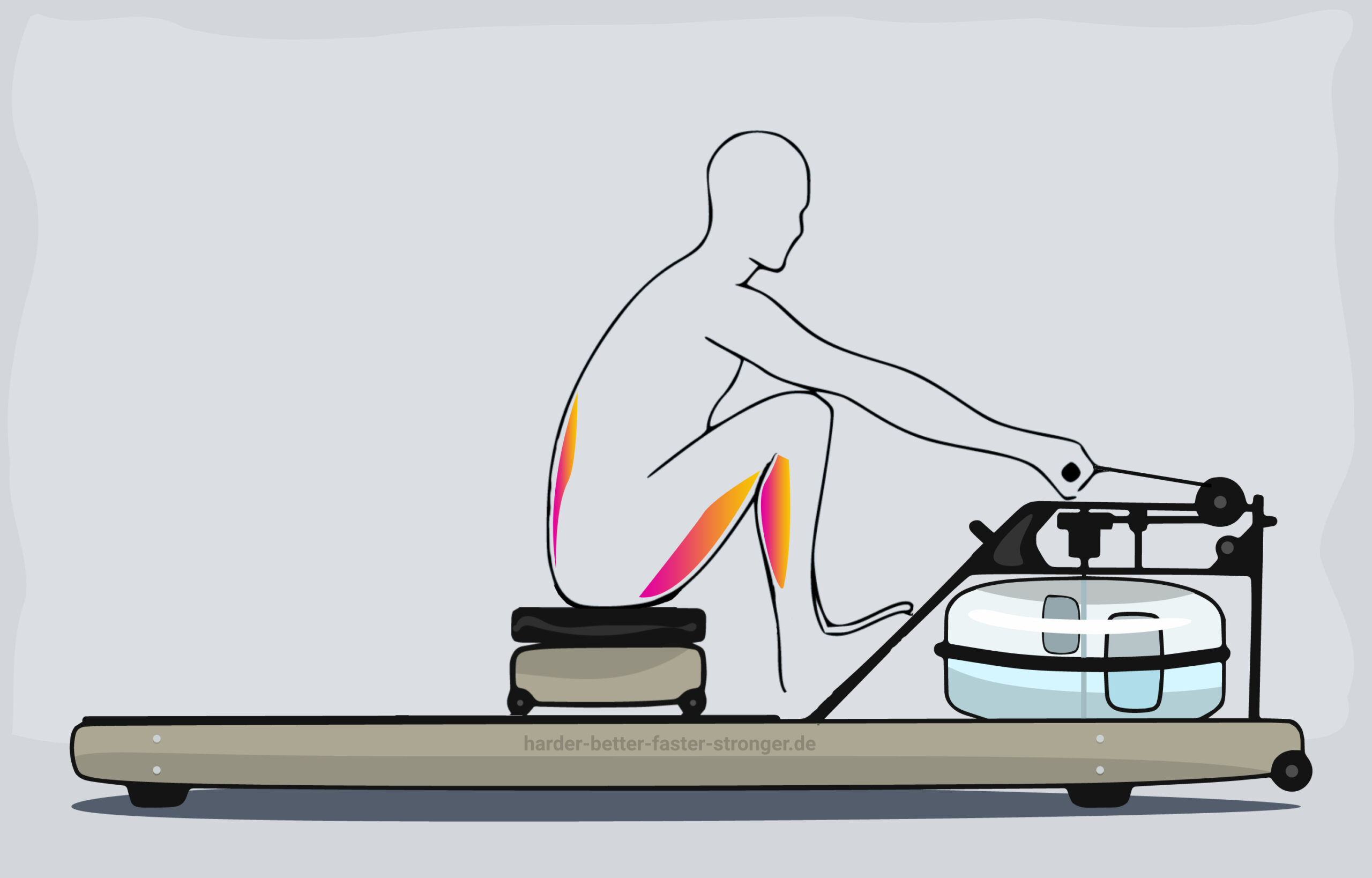
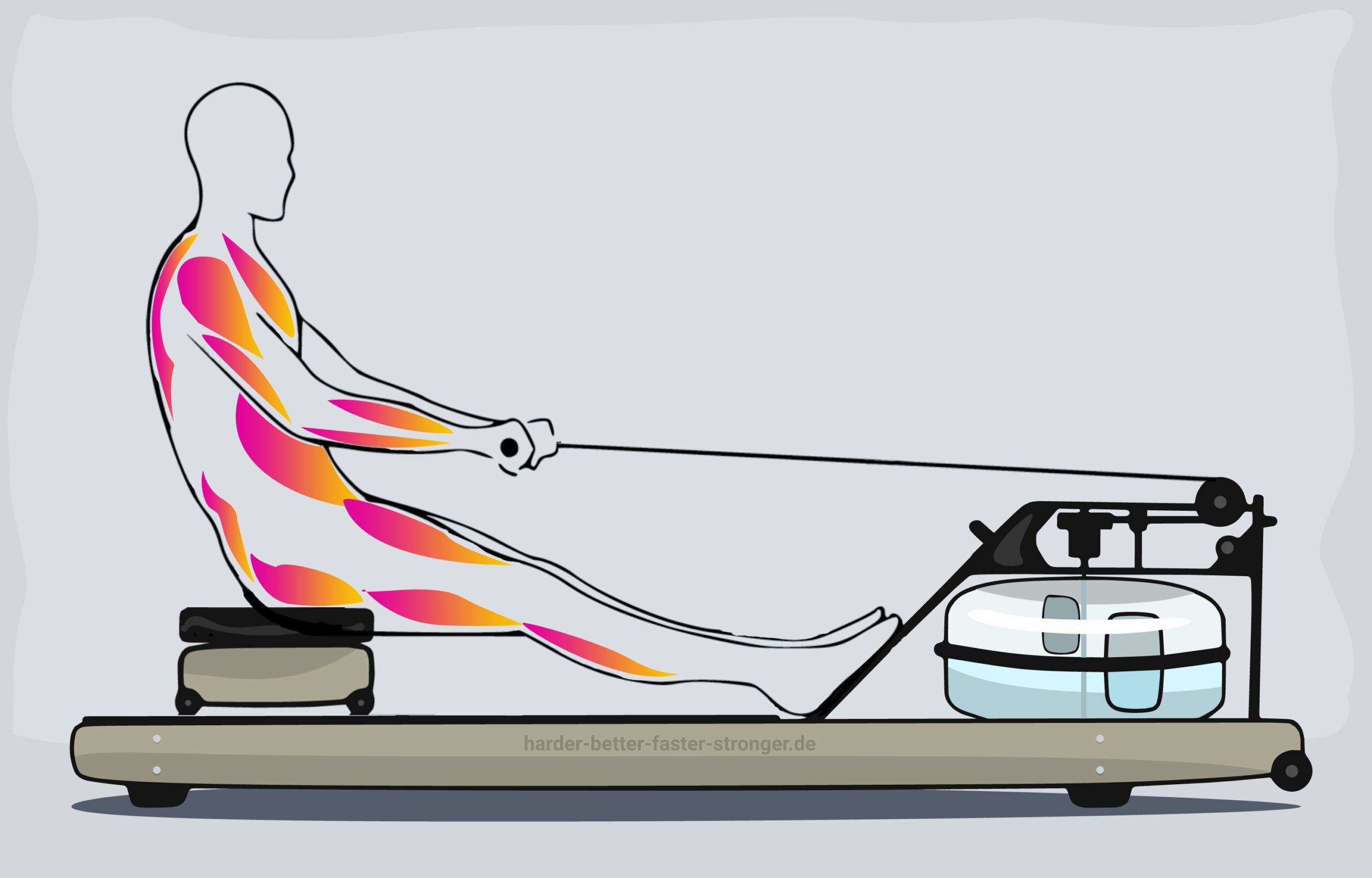
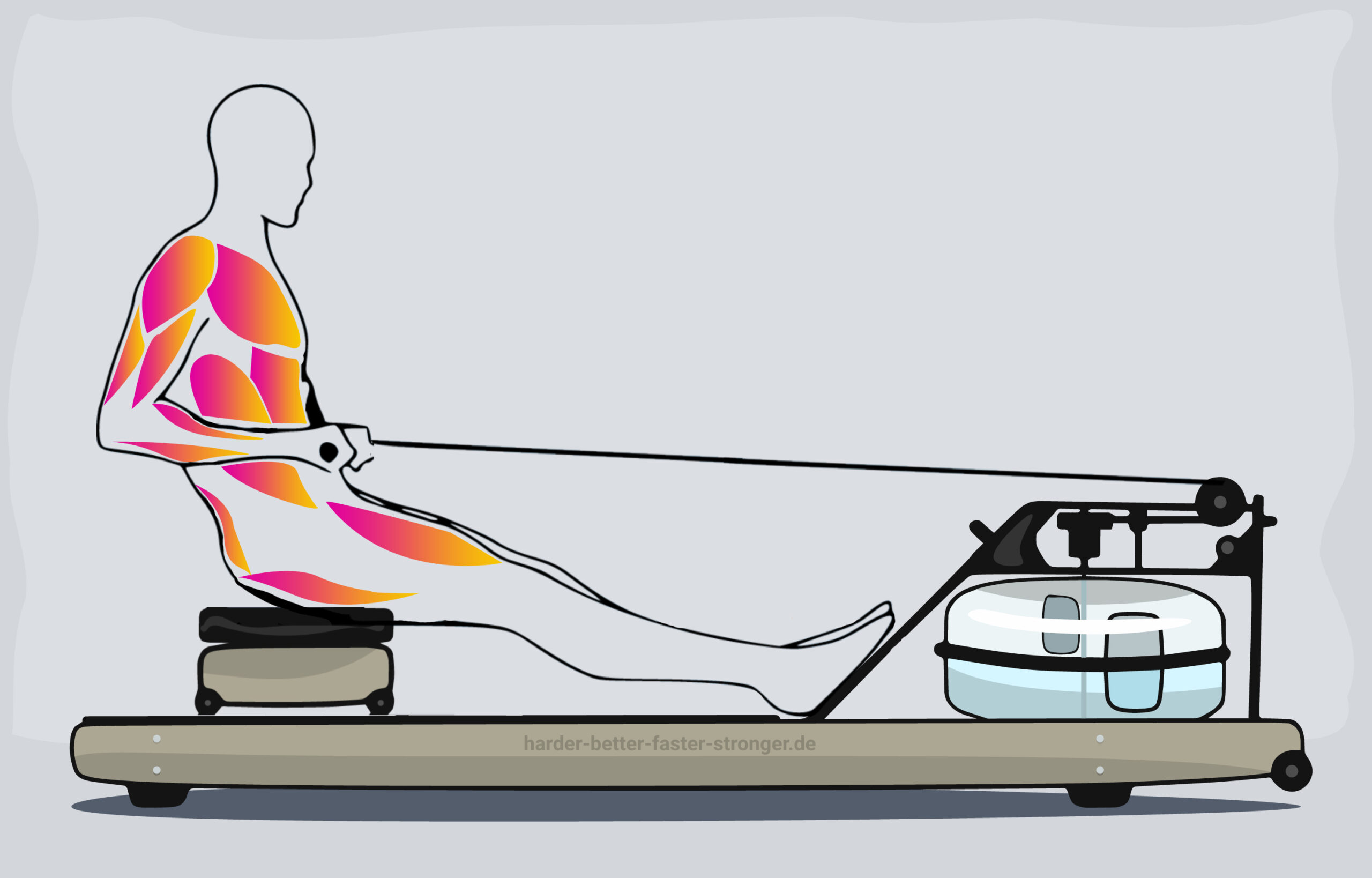
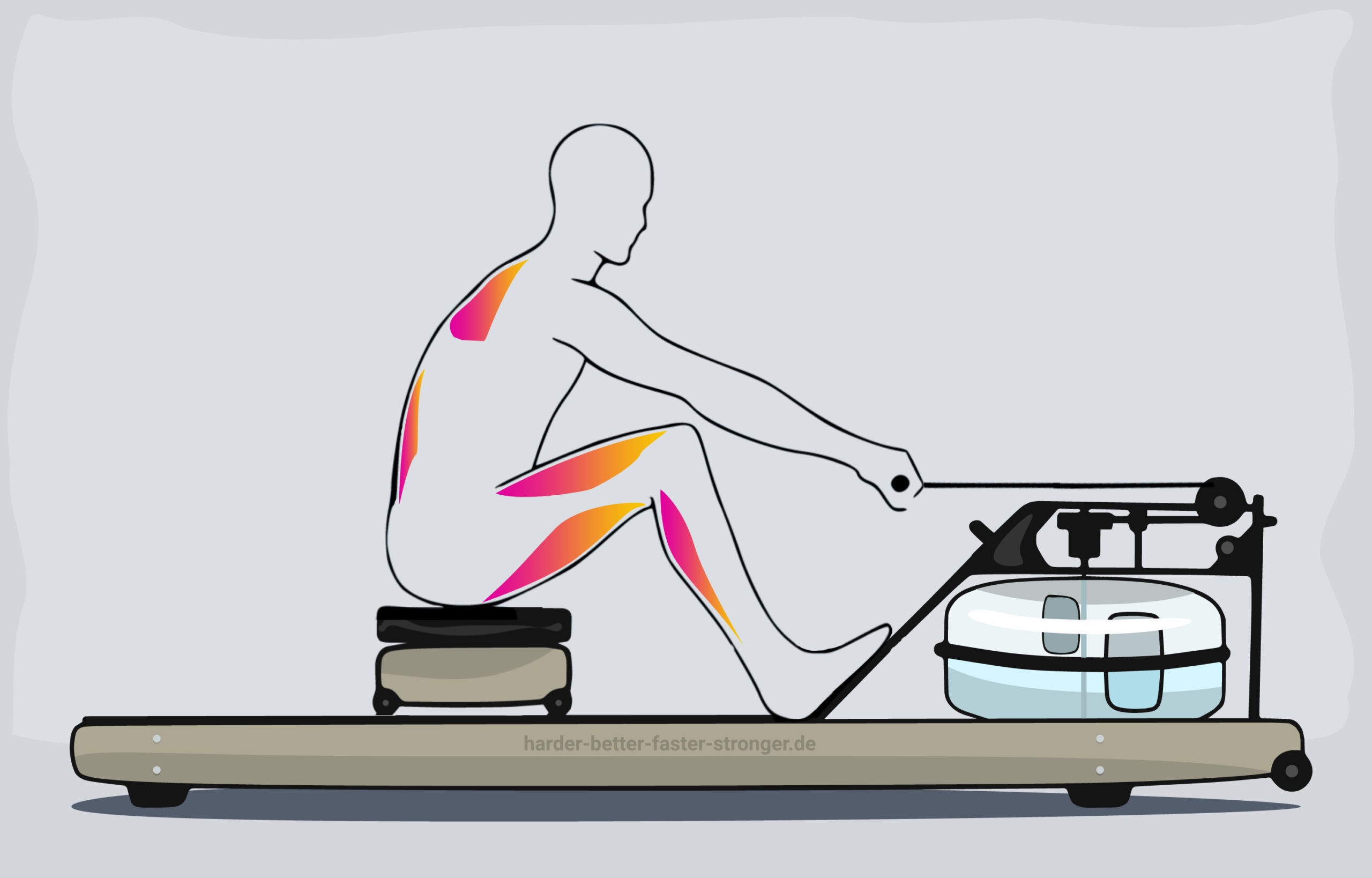
Then it starts over, and now the order matters: first the arms move forward, then the upper body tips forward, then the knees bend and you slide forward.
What should you watch out for when rowing?
You have taken the first strokes and made, and noticed, the typical mistakes. They include:
- Not keeping the rhythm (German), the pull and the return should relate roughly as 1:2, one beat for the pull and two beats for the return. Rolling back too fast makes you rush into the next stroke
- Not moving the arms clear of the knees before bending them, so the knees get in the way
- Not keeping the back straight and working too much from the arms
- "Pushing the box": letting the hips give way and not bringing the upper body along
The videos above show these mistakes as well and how to do it right.
For me, one of the most important factors is rhythm. Even if steady state (German) is not your topic at the beginning, the free app Metrownome helps.
I also see posture as one of the biggest sources of mistakes. Keep your back straight and lean back only towards the end of the stroke. That is important to avoid long-term back problems (German).
How do you learn proper rowing technique on the machine?
This video can also help you to learn the technique:
What matters is of course practice, but also reflecting on your own technique. Ideally a second person watches you row and gives feedback. A video works too if nobody is around.
At the start I did this together with my wife: we gave each other tips and filmed each other rowing to analyse the clips afterwards. They do not have to go on YouTube 😉
And finally, practice. You never learn to swim without getting into the water. Learning by doing: start rowing and keep coming back to posture, sequence and rhythm. Habits form over time, so it is better to focus on correct execution at the beginning. Anyone can row!
What does the force curve tell me about my technique?
An important feedback channel for your technique, for me and for others, is the force curve (German). Not every rowing machine has one (see rowing machines tested, German). You see it in the SmartRow app (German), on the RP3 (German), in the BioRower (German) app, on the Augletics (German) rowing machine and on the Concept2 PM5 monitor.
If you can use the force curve, use it to check how you execute the stroke.
Here is an example of a good curve:
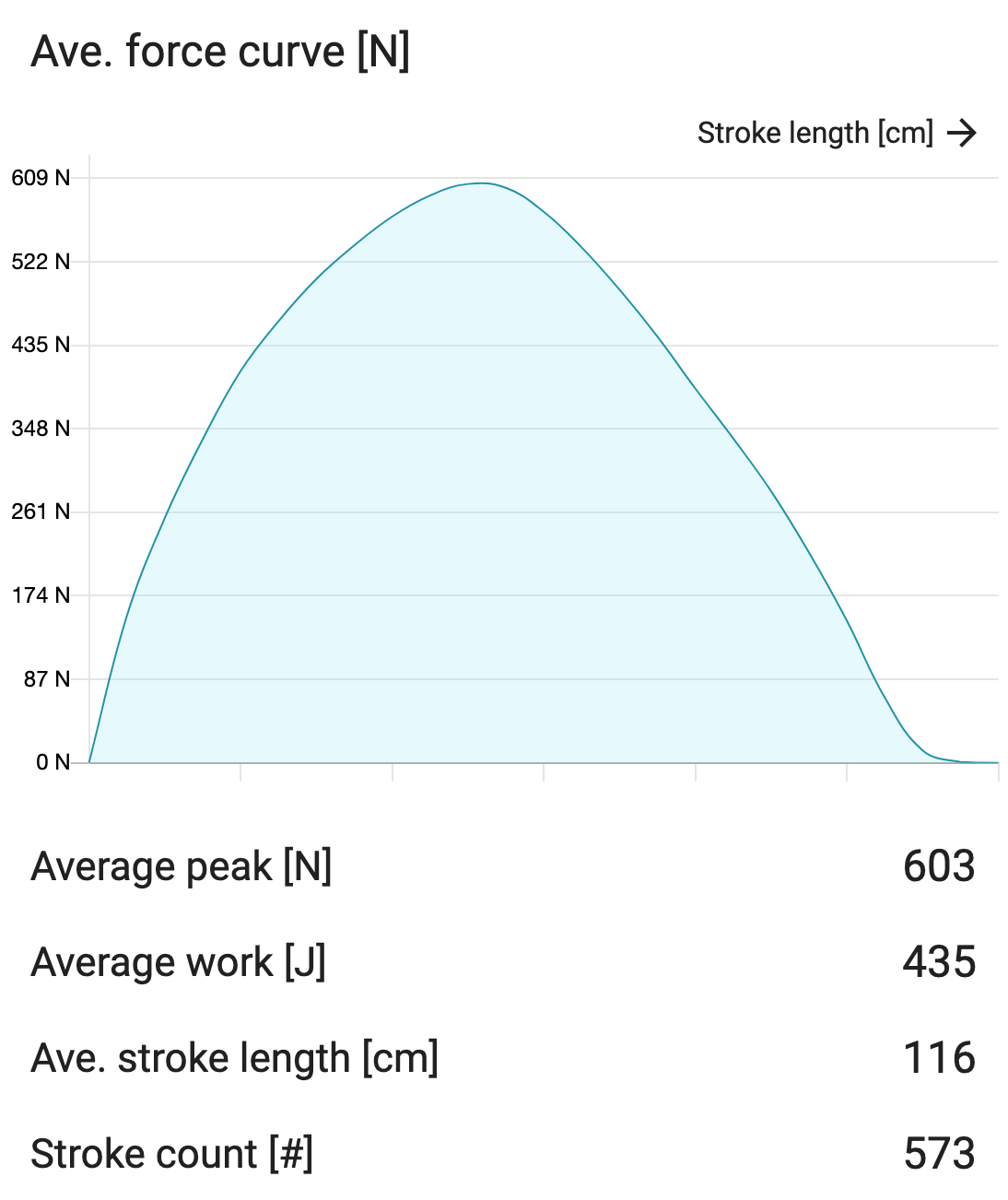
The force is spread evenly over the whole stroke. The curve is as wide as possible and not too pointed.
In contrast, a curve that is okay but a little too steep:
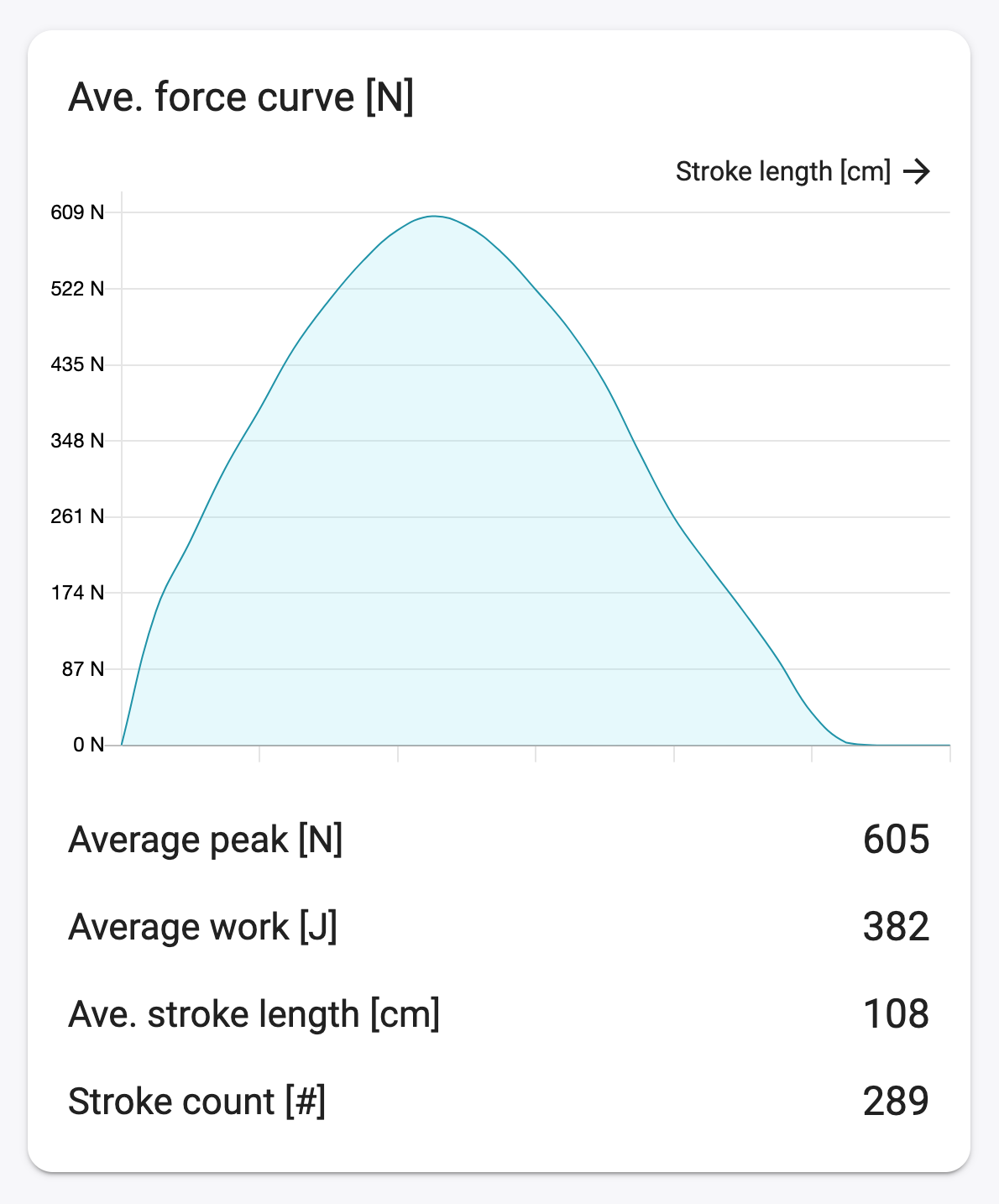
The force should be distributed as evenly as possible over the whole stroke.
At the start you can see a small step in the rise of the curve. That is the point where the initial force of the legs (step 1) passes into the body (step 2). Some rowers show this more clearly than others.
And here is a force curve that is not ideal:
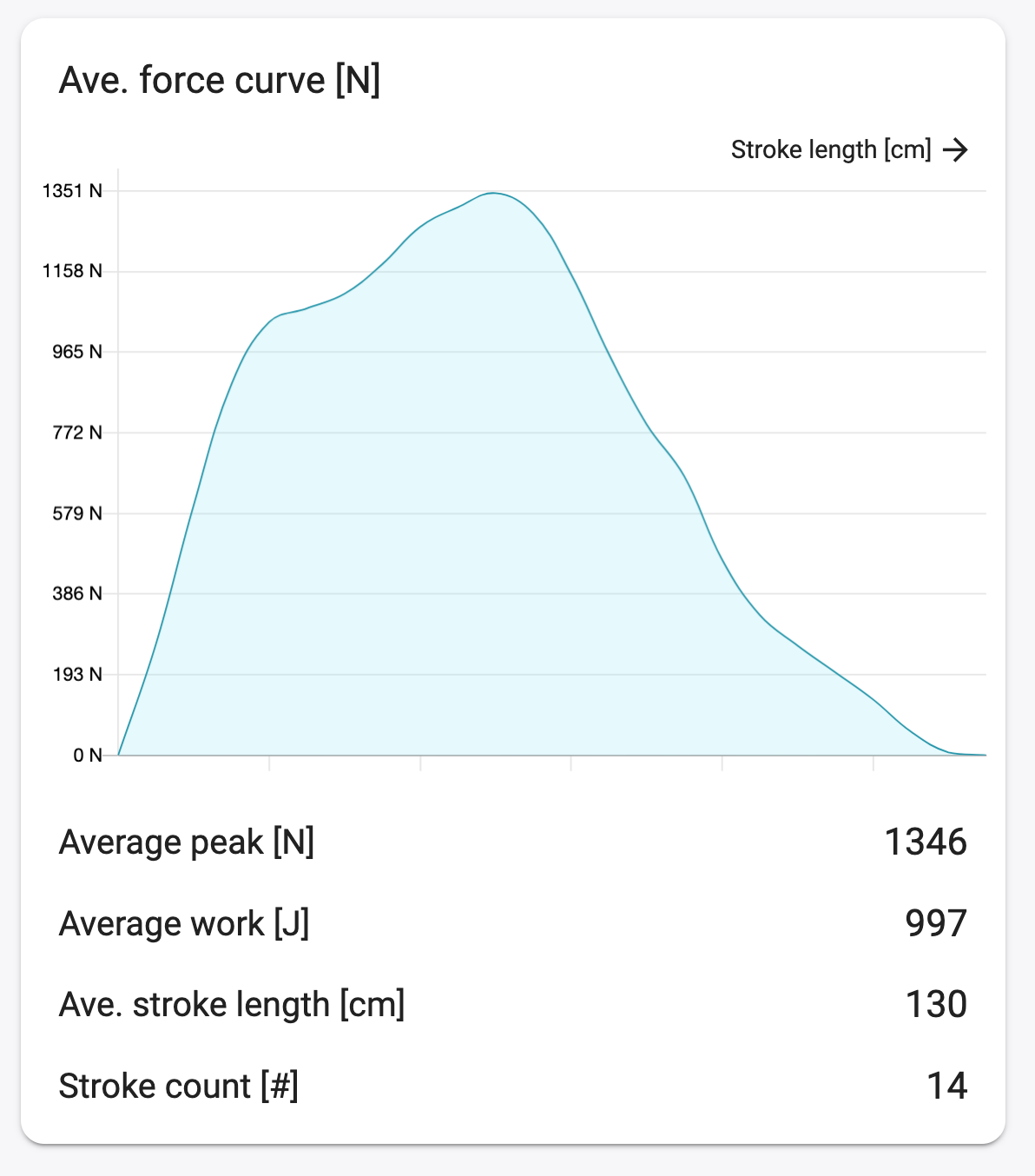
I produced this one in a 100 m sprint. It rises too quickly, forms a short peak, flattens out again and then slowly fades after a second peak. That points to an uneven, jerky pull on the machine and should be avoided.
I hope this article helps you a little to use your rowing machine correctly. As with all my articles, feedback is very welcome!
Get rowing 😉🤙🏼